White Sands Roofing
In late August, two of our staff traveled to White Sands National Park to assess failing stucco and extensive parapet damage on the White Sands Visitor Center. Placed at the edge of the world’s largest gypsum dune field, the Visitor Center was constructed between 1936 and 1940 as part of a New Deal project, utilizing local materials and labor under the Works Progress Administration. Designed by NPS architect Lyle Bennett, the building is a focal point of the White Sands Historic District, recognized for its unique architecture and its association with the National Park Service's history and rustic design emphasis.
Cornerstones staff removed samples of stucco, adobe, and earthen mortar from three sections of the building. We will be testing the stucco, mortar, and adobe for porosity/the rate of water absorption, presence of lime and cement, assessing the aggregate profiles and clay content, and more. While on site, we worked with an architect from Hennebery Eddy Architects to replace the adobes with new adobes and temporarily patch the stucco, which will soon undergo emergency repairs. Our tests will culminate in a report that outlines likely causes of the structural issues at the Visitors Center.
Chew Kee Store Museum, Fiddletown, CA
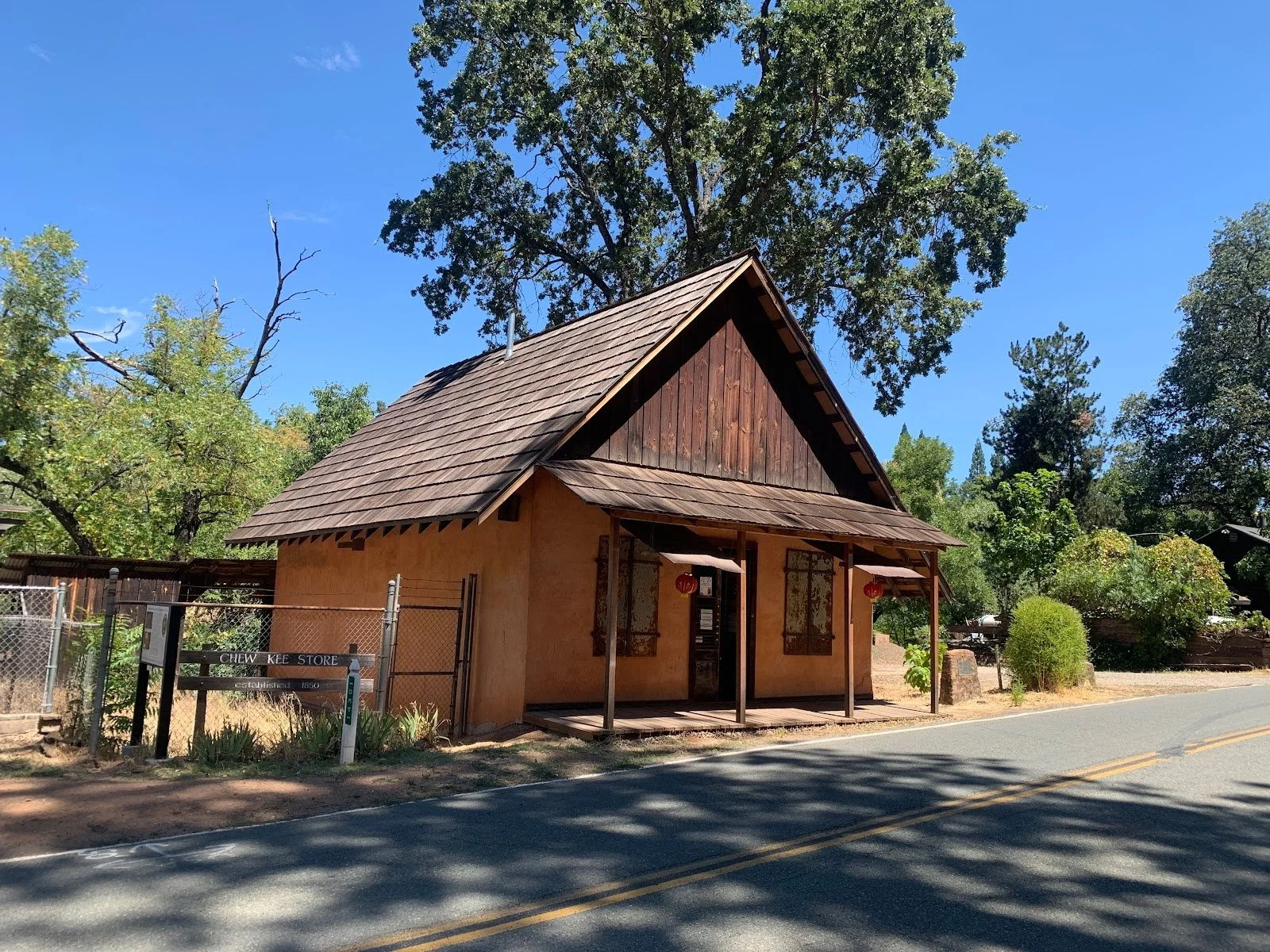
Cornerstones was recently contacted by the Fiddletown Preservation Society to assess and help with the restoration of the Chew Kee Store Museum. The Chew Kee Store Museum is a unique and important piece of Chinese American architectural history.
The rammed earth walls were lined with newspapers as wallpaper. Many of these date to the late 1800s papers from throughout California, but many from Stockton, CA.
Elephant Butte Casitas, Sierra County, New Mexico
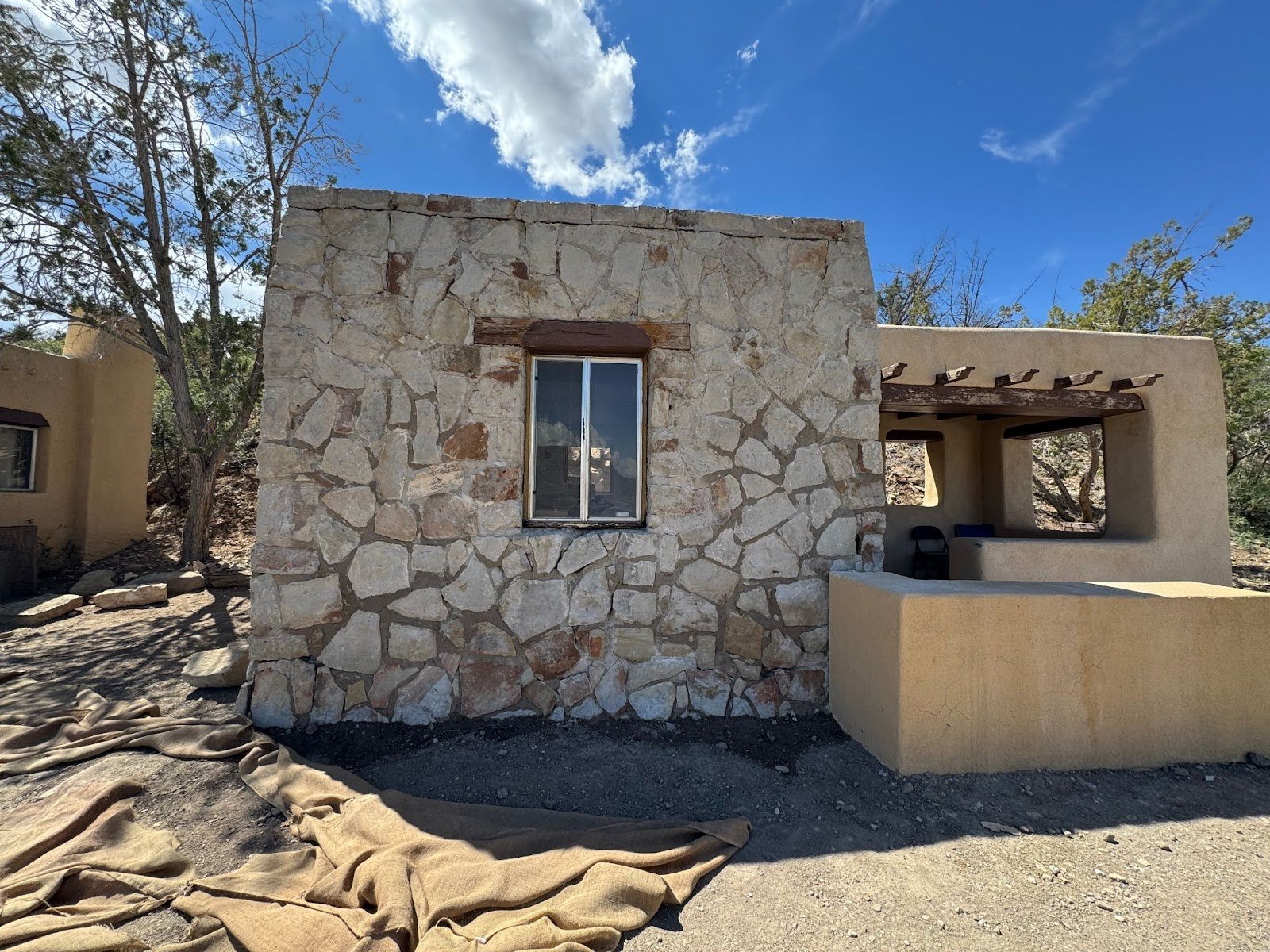
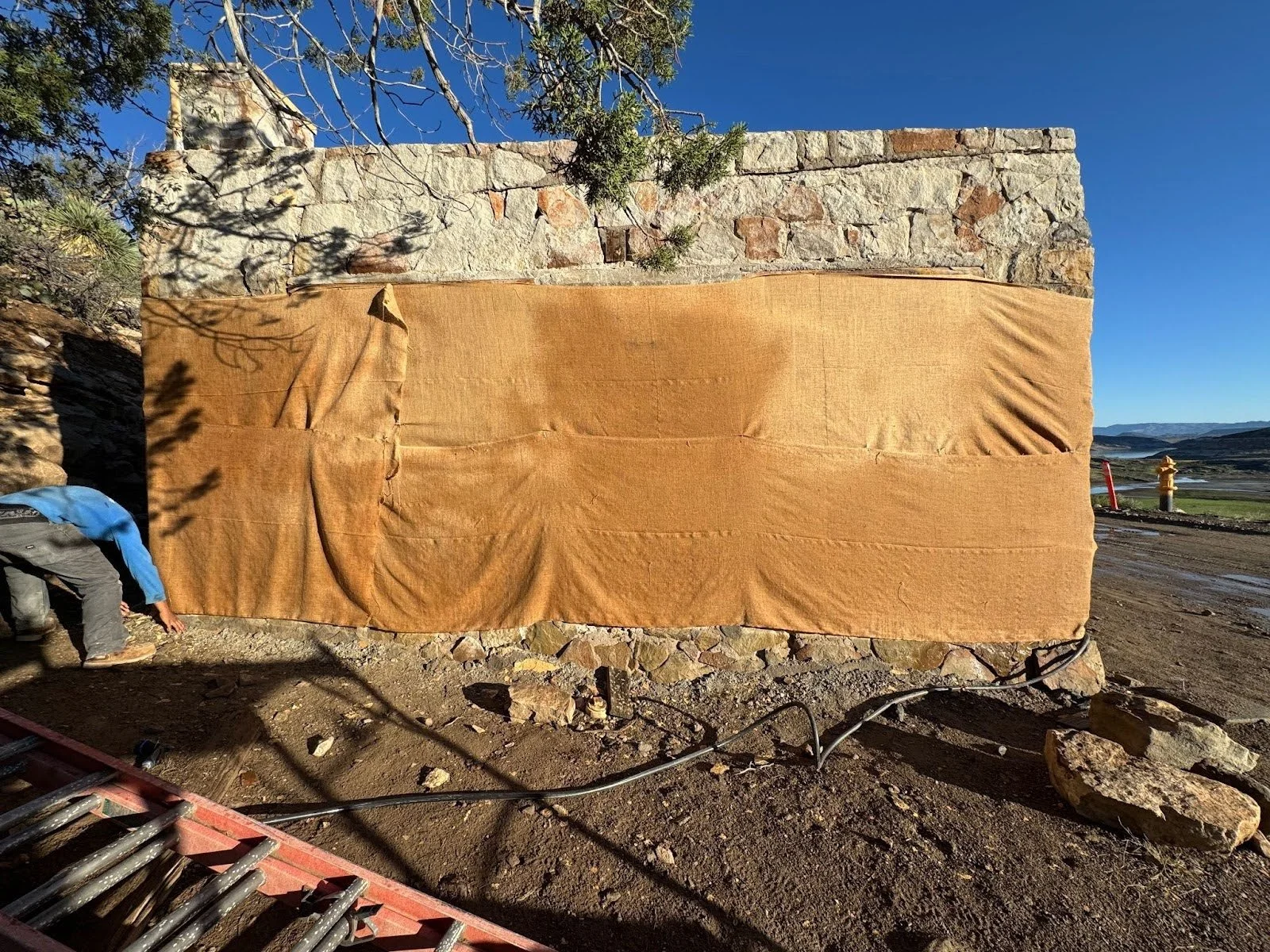
Over the course of three, eight day workshops, Cornerstones is supervising the Rocky Mountain Youth Corps in helping to restore and maintain the Casitas at the Elephant Butte Historic District, outside of Truth or Consequences, NM. The stone Casitas were originally built by the Civilian Conservation Corps in the late 1930’s as part of efforts to promote tourism along the newly constructed Elephant Butte Reservoir. Cornerstones’ partnership with the Bureau of Reclamation and the Rocky Mountain Youth Corps started back in 2022, where crews have been involved in removing stucco and repointing stone walls with a compatible lime-based mortar. The project highlights the importance of Cornerstones’ collaboration with Federal and non profit agencies, where we are able to share valuable expertise in helping to preserve historic buildings for future generations.

Adobe Construction Course at Luna Community College, Las Vegas, NM
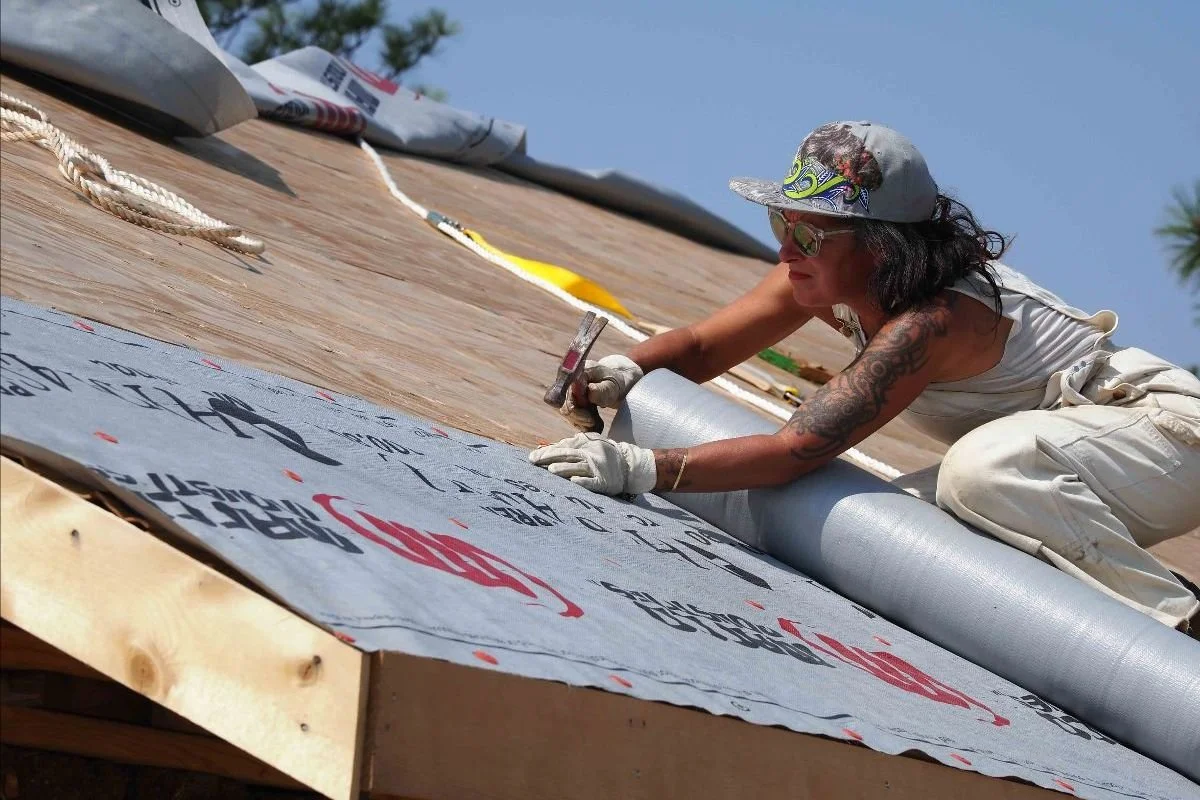
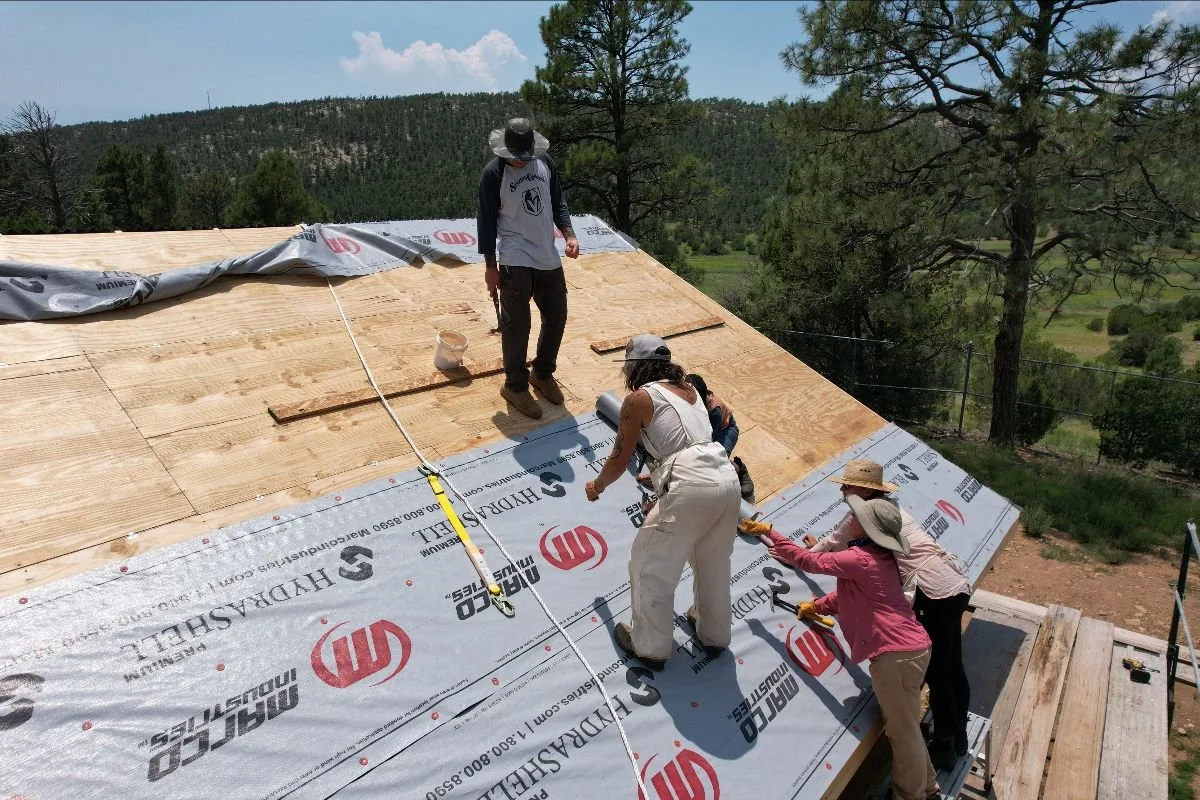
Once the walls were up and the bond beams in place, it was time to begin building the roof. We had purchased trusses for the roof framing in the Fall of 2024. Walls were finished in 2025. With the house surrounded by scaffolding it wasn’t difficult to get the trusses up one at a time. They were aligned to be 24 inches on center with two gable end trusses placed to back up adobe bricks to be laid in the gable. Once the trusses were fixed in place, the class nailed down ½ inch plywood sheathing over the trusses and rolled out a synthetic underlayment on the plywood. 26 gauge galvalume corrugated roofing panels were screwed down into the plywood. Gable end flashing was attached and the roof cap was prepared to be installed. This last task will occur in early September to finish the roof. Roofing harness for fall protection was learned and used by students who worked on the roof. That and 100% surrounding scaffolding provided safety protocol for all involved.
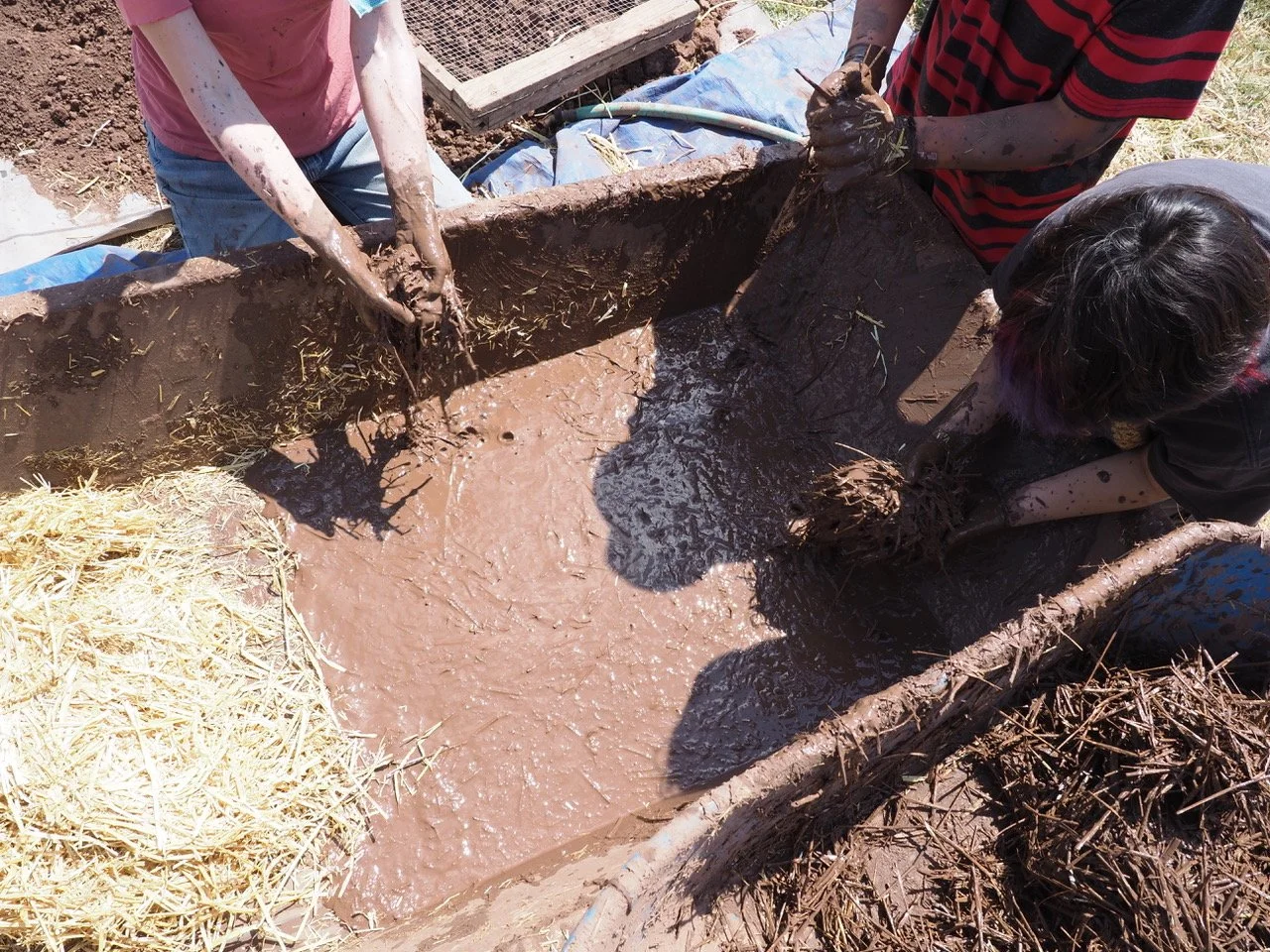
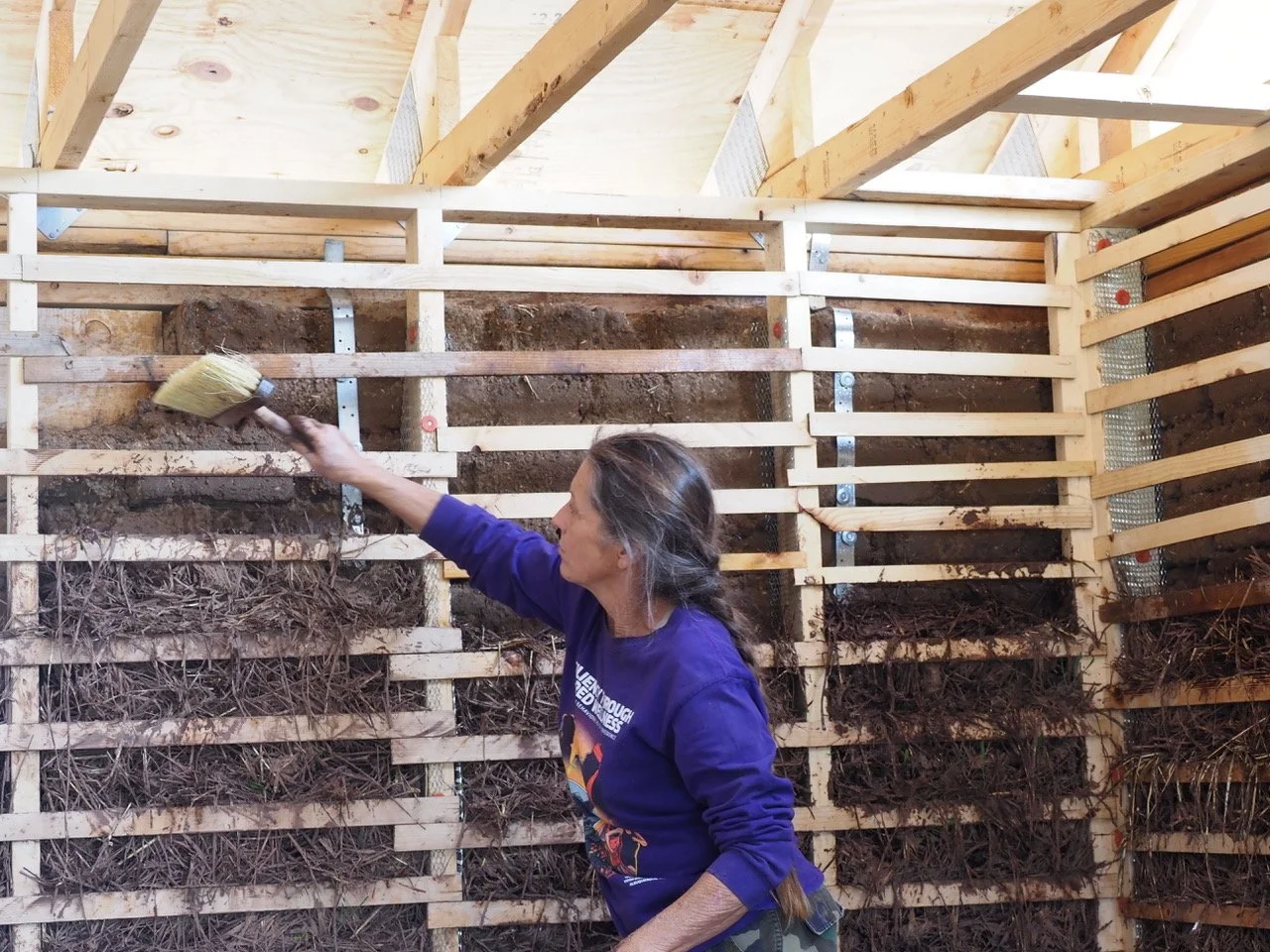
Everything we do in our adobe model home class at Luna CC has to pass the “low cost” test. Clay/straw insulation breaks the mold by being without question the absolutely cheapest form of insulation anyone could want. Pennies. Labor, not so good, but with an owner built home often labor is discounted. For our installation we prepared the interior of adobe walls with 2/4 furring set on 24” centers. To this frame we added lathing strips to both hold the clay/straw in place and also provide a solid key for mud plaster. Mixing the material proved challenging but after may trial and error sessions we found the right clay slip that would bond with straw stalks coating them 100% without dripping off. It was a goal to keep this clay at the absolute minimum to avoid a thick cob like mix. When ready we simply placed the mix into the cavities with a minimum of compaction. Air space within the mix is insulating. What could have been done in a few hours with fiberglass insulation took hours and hours of sieving dirt, mixing slip, mixing straw and placing it in cavities. The trade off of working with earthen materials and straw verses fiberglass was worth every extra hour spent and we saved hundreds of dollars. No itching or breathing fiberglass! These walls will now be 20” of earthen materials to provide a very significant thermal mass.
San Miguel Chapel, Santa Fe, NM

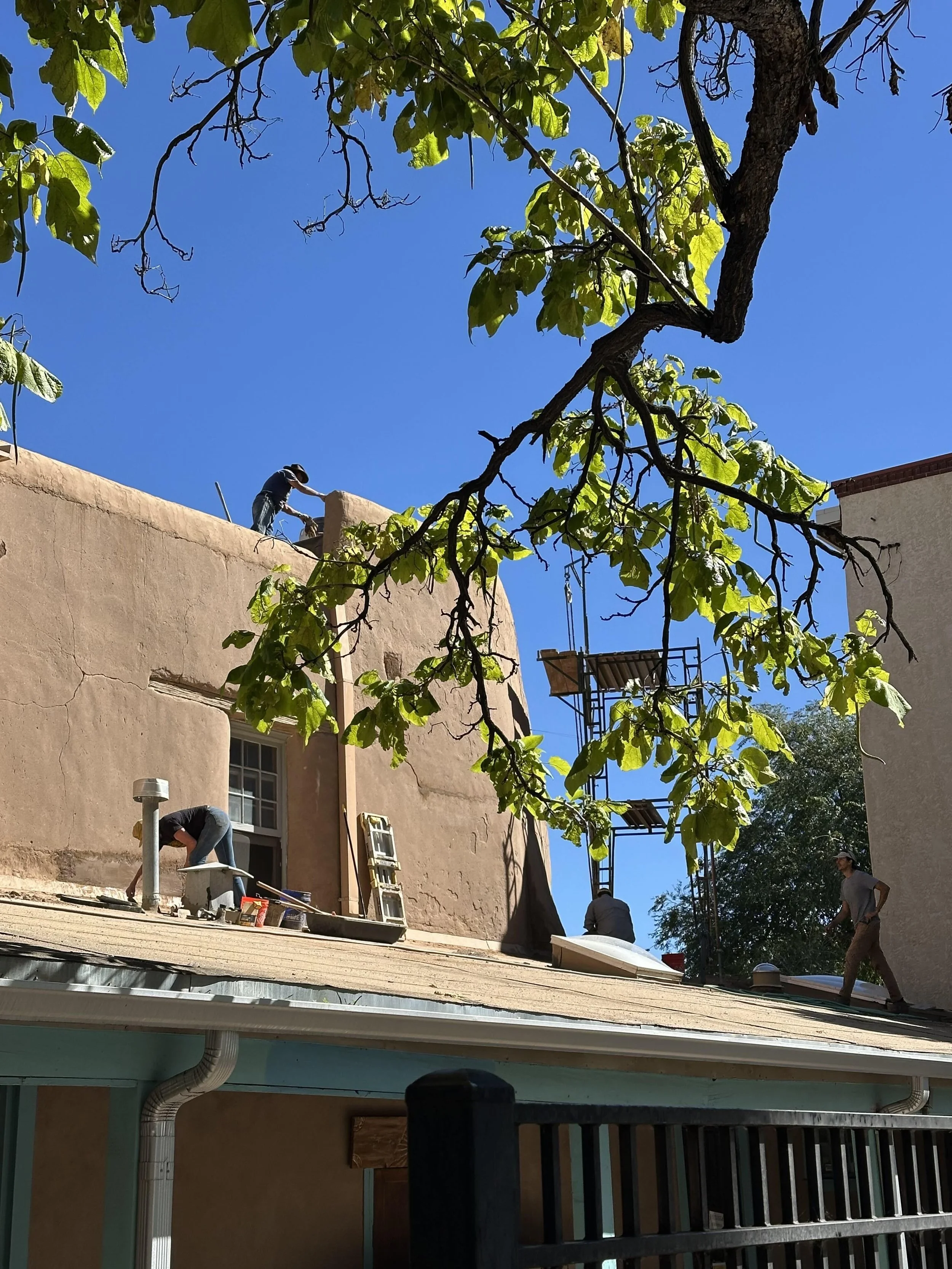
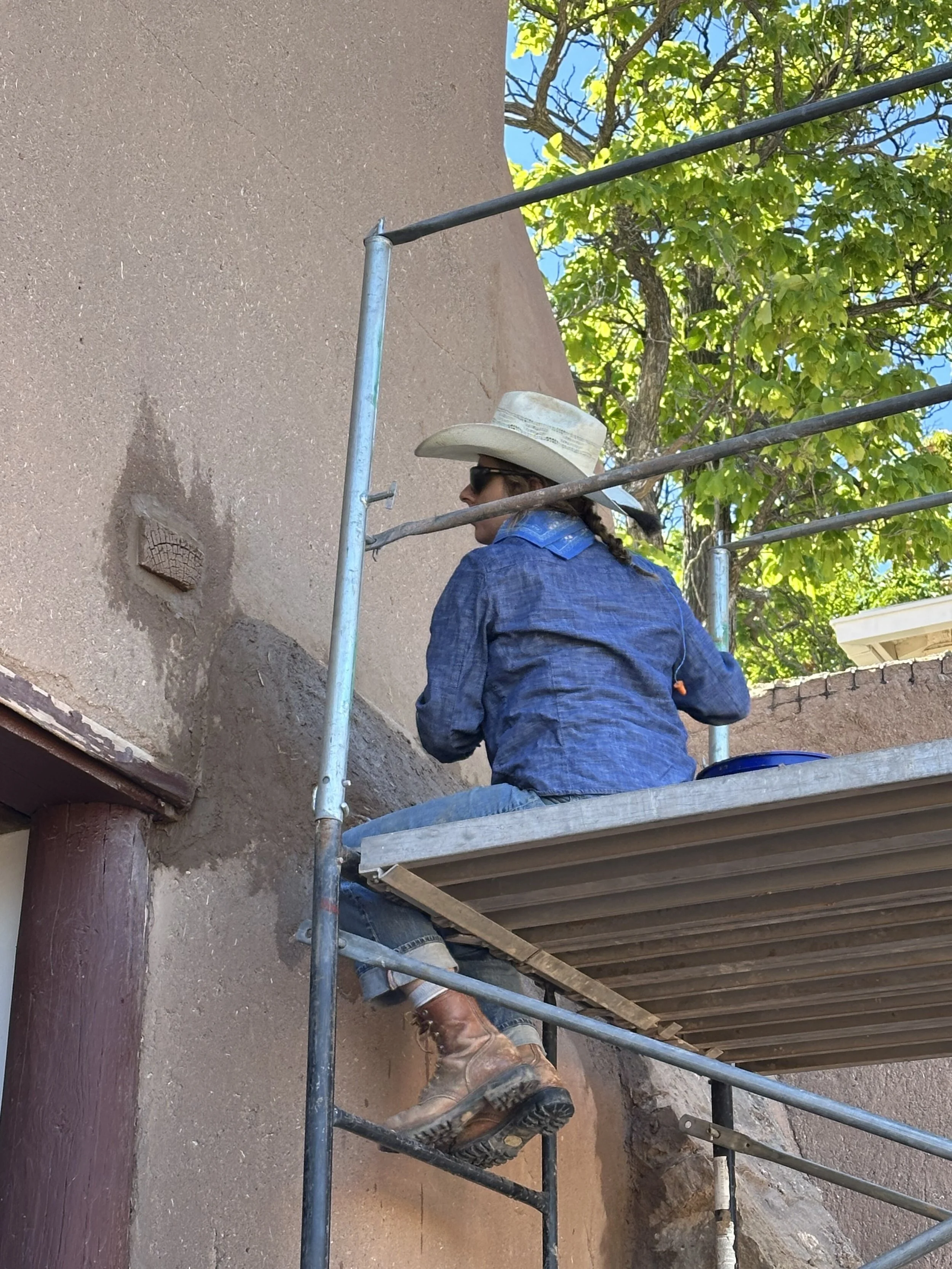
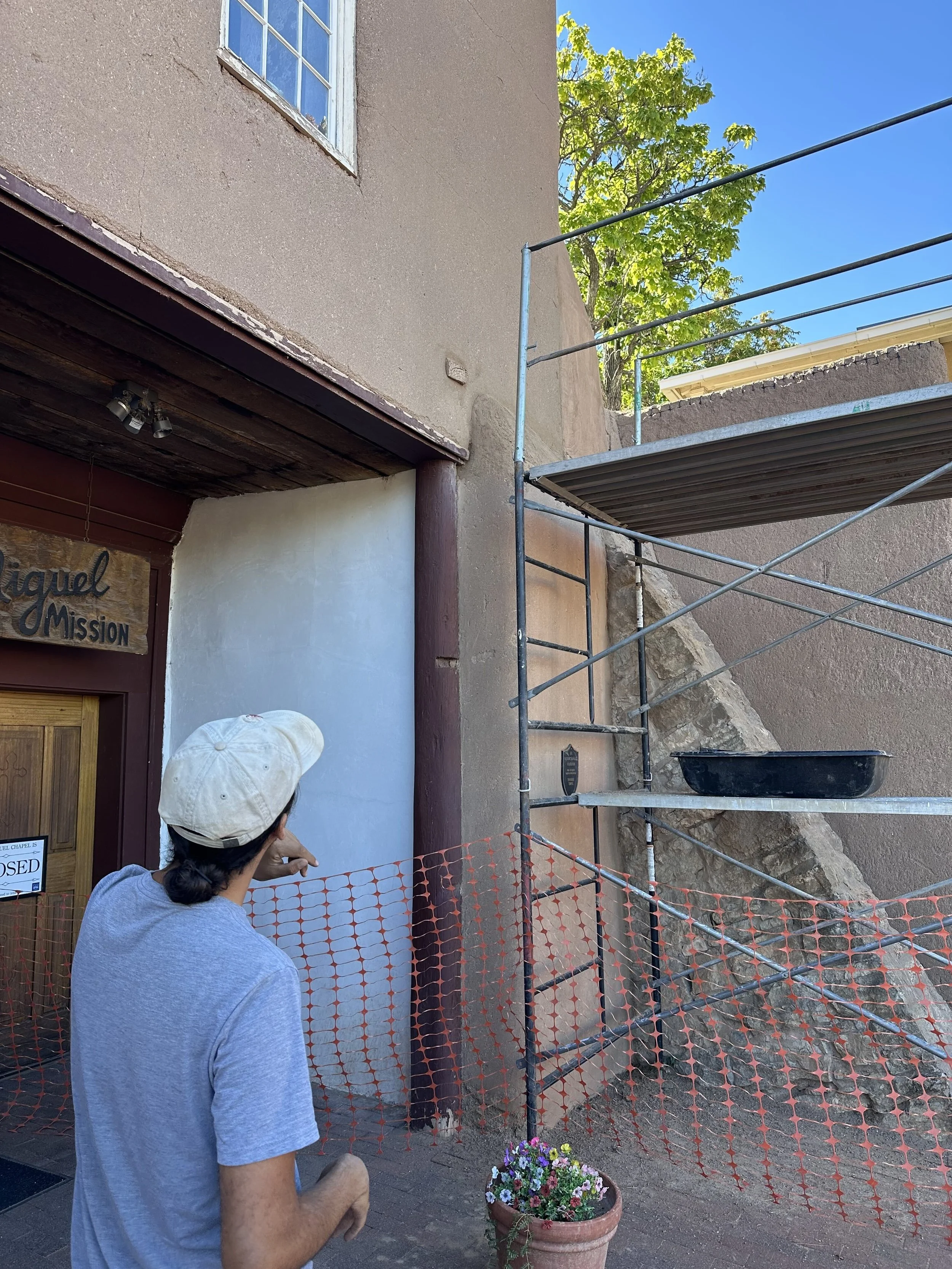
San Miguel Chapel Restoration – Fall 2025
In 2005, Cornerstones Community Partnerships and St. Michael’s High School launched a preservation partnership to restore San Miguel Chapel, a treasured historic landmark in Santa Fe. The last major conservation effort—focused on the bell tower and façade—was completed in 2014. Since then we have maintained the parapets, however, no plastering has been done on the vertical wall surfaces. Now, over a decade later, visible cracks and structural wear have emerged, signaling the need for timely remedial action. To protect the chapel from further damage caused by monsoon rains and early snowfall, restoration is scheduled to begin in September 2025, with an estimated duration of 4 to 6 weeks.
Corenrstones' Program Director Issac Logsdon and Adobera Kateri Lopez have been on site with 2-3 volunteers Monday-Thursday since September 15th. Their last day of plastering will be October 2nd.
🔸 Donate: Your financial contribution ensures that San Miguel Chapel remains a vibrant, enduring symbol of our shared cultural heritage.

🔸 Volunteer for future projects. Visit the Cornerstones Volunteer Page for more information and to sign up.
New Mexico Historic Preservation Conference, Las Vegas, NM
The countdown begins for the start of Viva Vegas ‘25 - the New Mexico Historic Preservation Conference, held at New Mexico Highlands in Las Vegas, NM. October 3 - 5, 2025. Registration is closed and we look forward to preservationists, adoberos, community leaders and members, and friends from all over the state (and beyond). We’d like to extend a special thank you to our generous sponsors
Visit the conference website, to find out more.
National Hispanic Cultural Center Celebrates
25 Years
Congratulations to our partners and good friends at the NHCC - looking forward to celebrating the next 25 years with you and our wonderful community!
Richard Moe 1936 - 2025
People recognize the importance of saving the places that tell the story of America in brick and stone and wood.
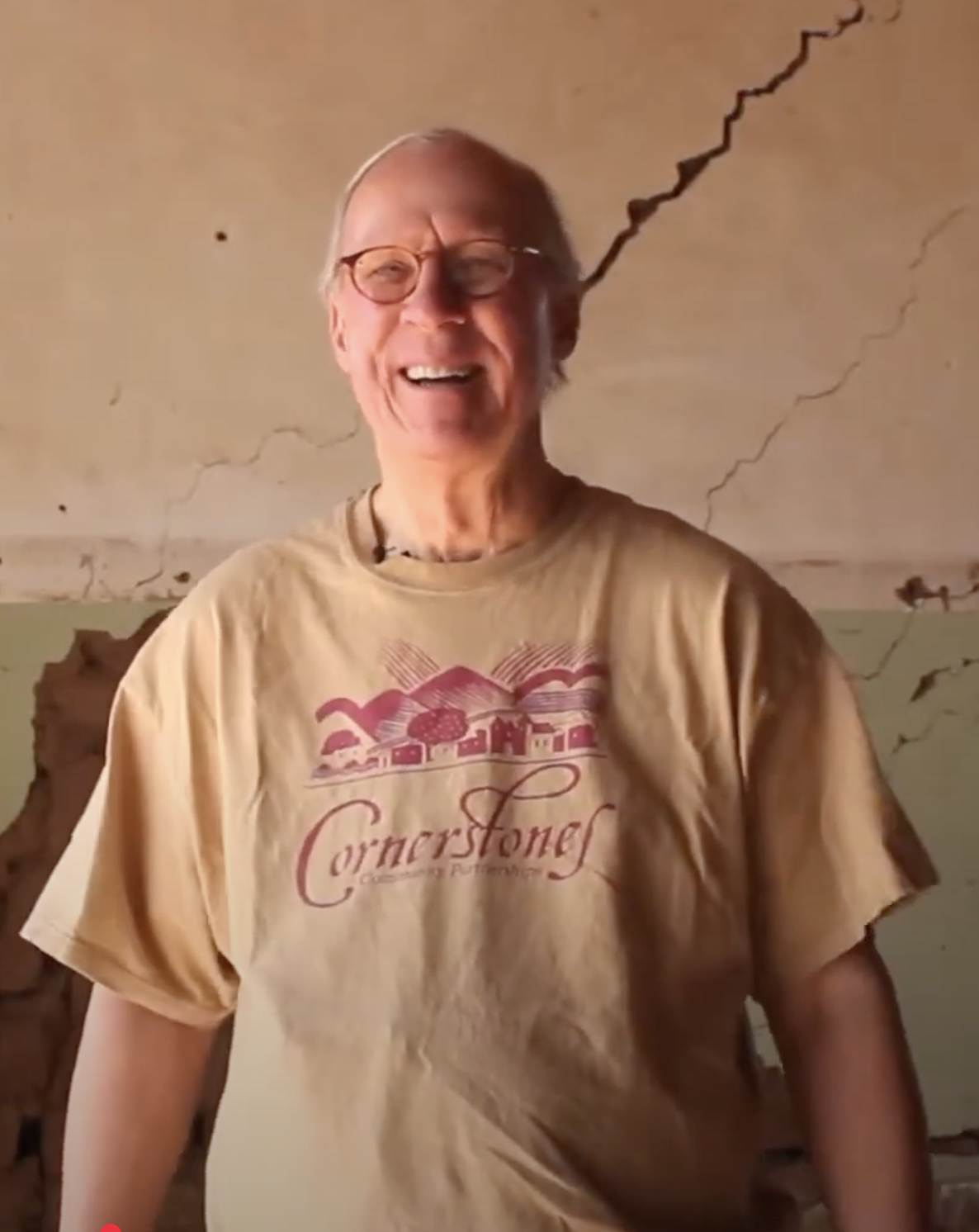
Cornerstones, New Mexico, and the historic preservation community has lost a good friend, leader, and mentor. Richard Moe passed away from complications of Parkinson’s Disease in Washington D.C. Sept. 15, 2025. He is remembered in New Mexico for his earnest interest and support for Chaco Canyon, San Esteban del Rey Church at Acoma Pueblo; his stewardship of the Save America’s Treasures Grant; and his edifying and successful tenure as President of the National Trust for Historic Preservation (1993 – 2010). He was a constant friend to Cornerstones Community Partnerships and we will miss him. Cornerstones staff and community send sympathy to Julia Moe and the family.
Quotes:
There may have been a time when preservation was about saving an old building here and there, but those days are gone. Preservation is in the business of saving communities and the values they embody. When you strip away the rhetoric, preservation is simply having the good sense to hold on to things that are well designed, that link us with our past in a meaningful way, and that have plenty of good use left in them. Richard Moe
The concept of preservation as "the ultimate recycling" is something that many people in the preservation community have believed and talked about for many years. Back in 1980, before the word "sustainability" came into widespread use, the National Trust issued a Preservation Week poster that featured an old building in the shape of a gas can - a reminder that reusing an existing building, instead of demolishing it and replacing it with a new one, is one good way to conserve energy. Much has changed since that poster appeared almost [28] years ago. The stakes have gotten much higher. Climate forecasts, meteorological reports, population growth projections, rising energy costs, dwindling reserves of water and fossil fuels, even the daily news headlines they all warn us that we can't wait any longer for "somebody" to figure out what to do. The "somebody" we need is us, and the need is clearly urgent. The challenge is to help people understand that preservation, by its very nature, is sustainability.
-Richard Moe
To those of you who donated in response to our recent Summer Appeal for funding - thank you so much! Because of your generosity, we are able to move forward with projects that strengthen both people and place: plastering at San Miguel Chapel, workshops at historic sites from Chimayó to Organ Pipe Cactus National Monument, consultations throughout New Mexico, and the construction of an adobe model home at a teaching site for the next generation of preservationists. And it’s never too late to support Cornerstones programs, projects, and plans.